The Divine Boy
Last and First MenThe Divine Boy was a Patagonian religious teacher whose life became the foundation of a popular cult of youth, but whose mature message challenged the very ideal his followers made into doctrine. Celebrated as an ageless Favourite Son, he urged people to remain youthful without refusing adulthood: life, he taught, required wholehearted effort without making victory or power its ultimate purpose. His followers preserved his iconoclasm more readily than this difficult distinction, turning a disruptive teaching into a model of docile childhood.
Identity and Legend
In the religious imagination of Patagonia, the Divine Boy was not an Elder Brother but the Favourite Child: eternally adolescent, mystically the son of all men and women, and an embodiment of youthful energy thought to be draining from the race. His worship expressed parental attachment, but also adults’ longing for their own lost youth and an uneasy recognition of collective senescence. The story attributed to him a century of fresh adolescence and explained his vigor as the concentration, many millionfold, of a weak vitality shared by the population.
The legend made him both human fulfillment and divine promise. He was understood primarily as the Son of Man, yet also as God—not a primal creator, but the outcome of human endeavor, an ideal realization of what humanity might become. This hopeful vision was shadowed by the fear that no youthful future could prevail: the race might still age and die, while spirit failed to overcome perishable flesh. In the legend, taking the Divine Boy’s message to heart offered a possible escape from that fate.
The Youth Movement and the Historical Figure
The historical figure behind the legend was born to shepherd parents in the Southern Andes. He first became known as the leader of a romantic youth movement. He urged young people to set an example to their elders, live beyond convention, enjoy themselves, work intensely but for a limited span, and remain loyal comrades. Above all, he made spiritual youth a religious obligation. He taught that a person could resist inward senility by keeping the soul awake and receptive to renewing influences. Mutual appreciation, he believed, could renew both those who gave and those who received it; the expanding Band of Youth accordingly understood its mission as the rejuvenation of humanity.
His apparent embodiment of this teaching gave it unusual force. While many of his contemporaries showed signs of senescence, he remained physically youthful and displayed a vitality that Patagonians regarded as extraordinary. Before his death, his descendants numbered in the hundreds. He also retained unusual intellectual agility: at twenty-five, when many people had settled into established habits of thought, he continued to struggle with successive waves of ideas and explore unfamiliar ground. His mature teaching came only around the age of forty, when he remained in physical prime. It proved difficult for his society to understand, expressing its culture while reaching a level of vitality few could attain.
The change in his public life mattered as much as his early appeal. An initial period of exuberant activity gave way to work and meditation. The figure who had preached youthfulness thus did not simply preserve youthful impulse; he developed a more searching account of what growth could mean. The final teaching was not a rejection of youth, but an insistence that youthfulness without continued development could become another form of immaturity.
The Mountain Experience and Mature Teaching
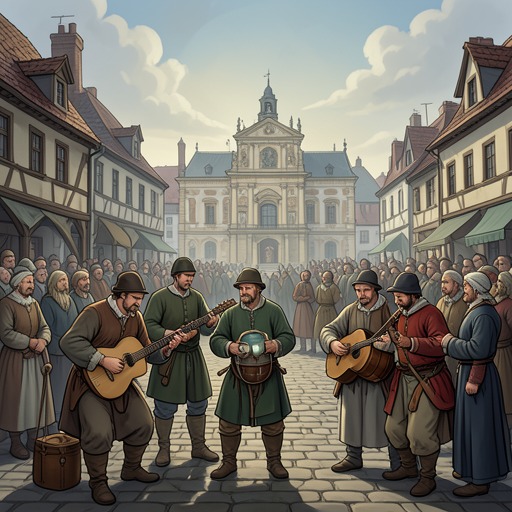
At a ceremony in the capital’s supreme temple, worshippers lay prostrate before the image of the Creator. The Divine Boy approached the altar, addressed the congregation and the image with laughter and irreverence, and challenged the authority of a deity he considered empty of the qualities its worshippers attributed to it. His unexpected confidence and reputation silenced the crowd, which listened as he criticized its combination of solemn devotion and childish aims.
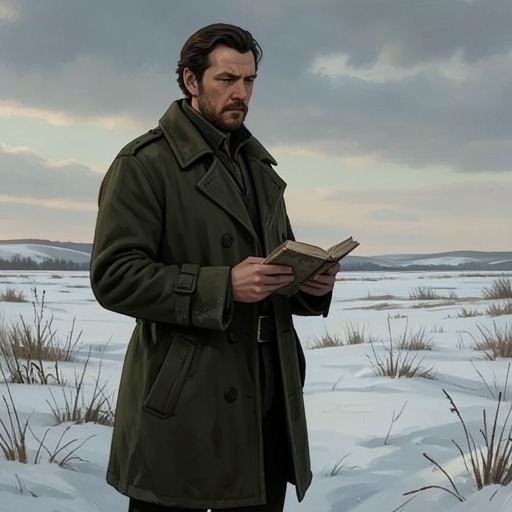
He explained that his understanding had changed during a blizzard on Aconcagua. Caught among snowfields and precipices, he was carried away by the storm, struggled repeatedly to rise from a drift, and believed death might prevent him from completing the work he still wanted to do. In that extremity, he said, he saw his situation from a perspective larger than his own wish to survive or succeed. His predicament remained terrible for the person living through it, but appeared as part of a wider pattern in which loss, as well as victory, could have meaning. The experience altered his relation to achievement: the value lay not solely in winning but in taking part in the whole activity of life.
He extended this insight from his own danger to humanity and the worlds beyond it, imagining events as parts of a larger composition viewed by an author beyond the individual role. He emerged from the drift with renewed strength and described a form of aliveness more intense than youthful energy. His practical challenge to the congregation was to outgrow both the worship of life for its own sake and obsequious submission to power. His mature ideal joined two demands: to remain supple and keen, and to keep developing skill in the serious but game-like activity of living. Effort mattered, but treating victory as the sole object could destroy the activity that gave effort its meaning.
Iconoclasm, Execution, and Public Reception
After making this argument, the Divine Boy took a large candlestick and shattered the temple image. Temple authorities arrested him; he was tried for sacrilege and executed. The destruction of the idol was the culmination of earlier conflicts with those in power, who used the conspicuous act as a pretext to suppress a figure they regarded as brilliant but dangerous.
His death did not prevent the movement from gaining popularity. The earlier teaching spoke directly to the Patagonians’ desire for renewed youth, and followers accepted even the final, more perplexing message. Yet they emphasized the visible act of iconoclasm over the meaning of his appeal. The contrast shaped the faith that spread from Patagonia across the civilized world: the gesture survived as an easily repeated emblem, while the demand to mature without surrendering youthful responsiveness was harder to retain.
For a time, the movement brought both spiritual and physical renewal. The Divine Boy’s descendants propagated what the historical account calls a potent new strain, and the resulting Patagonian Golden Age improved material conditions, carried civilization into northern continents, and revived engagement with scientific and philosophical problems. The revival was not lasting. The descendants overreached in physical, mental, and other forms of vitality, while their lineage was gradually diluted through contact with the larger population. After a few centuries, the race returned to a middle-aged outlook.
Distortion and Later Survival
The Divine Boy’s image changed along with the society that revered him. At first, it expressed an ideal of youth marked by loyalty, gaiety, comradeship, physical enthusiasm, and rebelliousness. Over time, older generations reshaped that figure into a sentimental picture of childhood: the violence and unruliness disappeared, replaced by docility and qualities adults found reassuring. The once challenging ideal became an expectation imposed on actual young people, though it no longer represented youth as they experienced it. A teaching meant to renew the race had become an oppressive model of what young people were supposed to be.
His last teaching nevertheless survived in a form that later readers could recover. After the Second Men had surpassed the First Men’s achievements in science and philosophy, engineers preparing to sink an energy shaft in Siberia discovered the Siberian Stone Library. Its weathered, disordered tablets were gradually reconstructed, and a biologist who led the party had recorded much of the Life of the Divine Boy, including the teacher’s final words. The Second Men recognized in them an experience familiar from the Yangtze Valley: an intense, dispassionate joy that earlier generations had associated with unhealthy states and regarded with shame. They were beginning to seek a healthier expression of it, and found the distant teacher’s words suggestive. His account therefore outlasted both the movement’s first fervor and its later distortion, returning as a resource when another human society began to need what it had once failed to understand.